

The Meaningful Path: Choosing Direction in an Age of Human Capability

© 2026 Luis A. Marrero. Boston Institute for Meaningful Purpose
[Text written by, with, and for human intelligence.]
In the previous two reflections, I explored two observations that seem to contradict one another.
First, when we step back and look at the broad sweep of history, humanity has made remarkable progress (Pinker, 2018; Roser, 2023). People are living longer, fewer children die in infancy, literacy has become widespread, and technological innovation has radically changed how we work, communicate, and solve problems.

Second, despite these improvements, many people still do not feel more secure or fulfilled. Anxiety, polarization, and dissatisfaction remain widespread. Progress, although real, has not automatically led to greater happiness or clarity about how we should live (Easterlin, 1974; Kahneman & Deaton, 2010).
These two realities lead to an important question:
If improved conditions do not automatically produce flourishing, what does?
I believe the answer is rooted in something deeper than progress itself. It lies in the meanings that influence how we understand ourselves, others, and the purpose of human life (Marrero, 2013).
Progress Has Given Us Power — Not Direction
Capability answers what we can do; meaning answers what we should do.
Human history has mostly been driven by the struggle for survival. For much of our past, daily life focused on obtaining food, shelter, and safety. In such conditions, survival itself shaped human priorities. As living conditions improved, something changed. For the first time, large groups of people gained the freedom to ask deeper questions about how to live, what to pursue, and what their lives should ultimately serve. Progress opened up new possibilities.
But possibility alone does not provide direction.
Technology tells us what we can do.
It does not tell us what we should do.
This distinction becomes increasingly important as human capability grows.

Two Possible Paths
How we understand humanity determines how we treat one another.
The expansion of human capability puts us at a crossroads between two major paths.
One path can be described as the meaningful path. On this path, human beings are understood as persons with dignity, responsibility, and potential. Institutions and systems are designed not merely for efficiency but for the development of human flourishing (Marrero & Persuitte, 2022).
Education seeks to develop understanding and character.
Leadership shifts from control to stewardship.
Technology serves as a tool for improving human well-being.
The meaningful path does not reject progress. It guides it.
The Alternative Meaningless Path
The alternative approach is more subtle but equally impactful. In this direction, humans are increasingly viewed as objects to be managed, optimized, or controlled. Efficiency becomes the primary focus, and systems prioritize performance and profit over people. The mistaken implication is clear: prioritizing people conflicts with earning.
When this happens, relationships turn into transactions, institutions lose their human essence, and technological power expands without a corresponding increase in wisdom.
The difference between these two routes isn't in our tools, but in the meanings that direct how we use them.

Figure 1 The Choice: The Meaningful or Meaningless Paths
Why This Moment Matters
For the first time in history, human tools may exceed the wisdom guiding them.
Throughout history, the impact of human error was often limited by the size of our tools. Even when leaders made poor decisions, their power to reshape the world was restricted. That limitation is quickly fading. Today, technological advancements—from artificial intelligence to biotechnology—expand human influence at an unprecedented pace. Our ability to shape societies, environments, and biological systems is accelerating each decade. This poses a new challenge for humanity.
For the first time in history, our capabilities may exceed the wisdom of the meanings guiding them.
When power advances more rapidly than wisdom, danger arises—not always out of malice, but because people’s assumptions about human life go unexamined.
The reflections in this series illustrate a simple progression: human progress expands possibilities, happiness reveals the limits of material wealth, and meaning ultimately influences the direction those possibilities take.
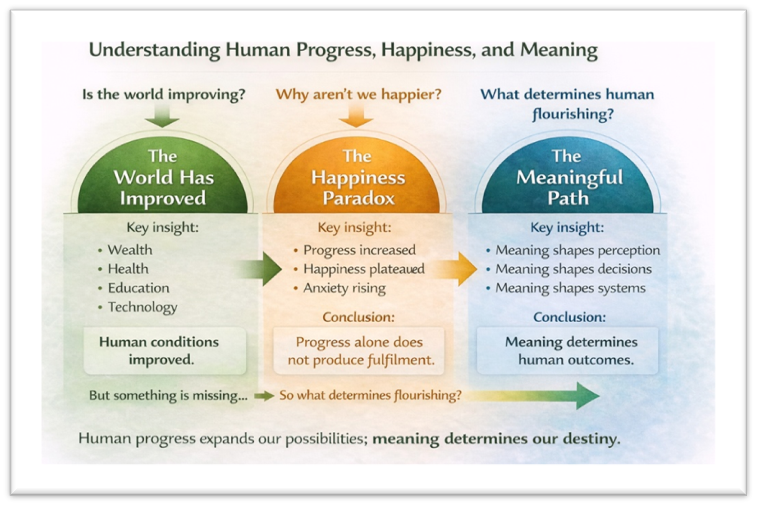
Figure 2 : The Progress à Happiness à Meaning Framework
Meaning as the Missing Variable
Human outcomes follow the meanings people act upon.
Across psychology, philosophy, and lived experience, one insight repeatedly appears: people act according to the meanings they hold.
Meaning influences perception.
Perception influences decisions.
Decisions influence consequences.
When individuals or institutions adopt meanings that honor human dignity and responsibility, their actions tend to foster growth and cooperation. When their underlying meanings diminish people to objects or tools, systems often become cold, fragmented, and resistant to real improvement.
Therefore, the future will not be dictated solely by technology, economics, or policy. It will be shaped by meaning.
Psychologists and philosophers have long argued that meaning plays a central role in human flourishing (Frankl, 1959/2006; Steger, 2012).
Why Change Often Fails
Distorted meanings create resistance to meaningful change.
At this point, a common question comes up: if the meaningful path is so helpful, why do individuals and societies often struggle to follow it?
Part of the answer lies in the meanings that already influence our perceptions and institutions. For example, the assumptions leaders hold about human nature ultimately shape the institutions they create (Drucker, 2007).
When the meanings guiding decisions are incomplete, biased, or based on false information, they produce what I call dysmeaning—distorted understandings that hide reality rather than reveal it.
Dysmeaning does more than mislead individuals. Over time, it becomes ingrained in systems, habits, and institutions. When this happens, efforts to introduce better ideas or solutions often face resistance. People may reject corrective information, reinterpret it defensively, or stick to existing patterns even when better options are available.
This systemic resistance can be called meaningantics—the tendency of individuals, organizations, or societies operating with distorted meanings to resist or block meaningful change.
Logoteleology's meaningantics helps explain why progress and solutions alone don't guarantee improvement. When flawed meanings influence perception and decisions, even well-designed solutions may fail to take hold.
Understanding how dysmeaning and meaningantics work can shed light on many challenges we see in the modern world—from organizational dysfunction to political polarization and social fragmentation.
I will explore this dynamic more fully in future reflections and in a book I am writing on the subject.

Figure 3 : When the foundation is wrong, the structure cannot endure.
Choosing the Meaningful Path
Progress expands human power; meaning determines its direction.
The challenge ahead is not to oppose progress or fear innovation. The remarkable advances of human civilization have enhanced many lives and broadened opportunities for learning, creativity, and collaboration.
The true challenge is to ensure our growing power is guided by a meaningful understanding.
Human progress has broadened our possibilities.
Meaning will shape the direction those possibilities go.

If we select the meaningful path—rooted in dignity, responsibility, and careful reflection—our growing abilities can serve as tools for flourishing.
If we ignore the meanings guiding our actions, the same abilities can increase confusion and division.
The decision between these options isn't made just once. It's made continually through the meanings we accept and the systems we create.
In that way, humanity's future will depend less on what we invent and more on how we understand and care for ourselves.
Human progress expands our possibilities; meaning determines our destiny.
References
Drucker, P. F. (2007). The practice of management. HarperCollins. (Original work published 1954)
Easterlin, R. A. (1974). Does economic growth improve the human lot? Some empirical evidence. In P. A. David & M. W.
Reder (Eds.), Nations and households in economic growth (pp. 89–125). Academic Press.
Frankl, V. E. (2006). Man’s search for meaning. Beacon Press. (Original work published 1959)
Kahneman, D., & Deaton, A. (2010). High income improves evaluation of life but not emotional well-being. Proceedings of the National Academy of Sciences, 107(38), 16489–16493.
Marrero, L. A. (2013). The Path to a Meaningful Purpose: Psychological Foundations of Logoteleology. iUniverse.
Marrero, L.A., & Persuitte, D. Meaningful Purpose: A Primer in Logoteleology. iUniverse.
Maslow, A. H. (1954). Motivation and personality. Harper & Row.
Pinker, S. (2018). Enlightenment now: The case for reason, science, humanism, and progress. Viking.
Roser, M. (2023). Human progress. Our World in Data. https://ourworldindata.org
Steger, M. F. (2012). Making meaning in life. Psychological Inquiry, 23(4), 381–385.
World Bank. (2023). World development indicators. World Bank. https://data.worldbank.org



Comments